"Timeless Elegance: Discover Our Vintage Victorian Hall Trees"
Nestled in the heart of the Victorian era, the antique hall tree stands as a testament to the opulence and craftsmanship of the period. This multifunctional piece of furniture was not just a coat stand; it was a symbol of status, a reflection of the owner's taste, and a practical solution for the bustling Victorian household. Let's delve into the world of antique Victorian hall trees, exploring their history, design, and modern-day appeal.
Understanding the Victorian Hall Tree
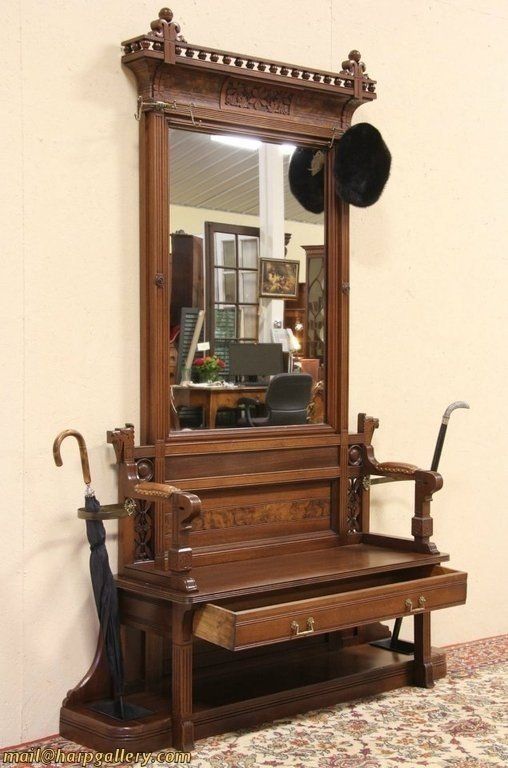
The Victorian hall tree, also known as a hall stand or hall seat, was a common sight in the grand entrance halls of Victorian homes. Its design was a harmonious blend of functionality and aesthetics, reflecting the Victorian passion for ornate detail and practicality. Typically, a hall tree consisted of a tall, often ornately carved, wooden frame with hooks for coats and hats, a mirror for last-minute grooming checks, and a seat for removing or putting on footwear.
Evolution of Design: From Necessity to Art
The hall tree's origins can be traced back to the 17th century, where it served as a simple coat stand. However, it was during the Victorian era (1837-1901) that the hall tree evolved into a statement piece. The Victorians, known for their love of intricate detail and lavish ornamentation, transformed the humble coat stand into a work of art. The hall tree became a showcase for the finest woods, such as mahogany and walnut, and was often adorned with intricate carvings, inlays, and brass fittings.


Popular Design Elements
- Carved Details: Intricate carvings of acanthus leaves, grapes, and other nature-inspired motifs were common.
- Turned Posts: Many hall trees featured turned posts, adding a touch of elegance and reflecting the influence of the Gothic Revival style.
- Brass or Bronze Fittings: These not only added to the hall tree's aesthetic appeal but also provided durability and a touch of luxury.
- Mirror: A large mirror was often incorporated, reflecting the Victorian love for looking one's best at all times.
The Hall Tree in the Modern Home
Today, antique Victorian hall trees are highly sought after for their beauty, craftsmanship, and historical significance. They bring a touch of elegance and character to modern homes, serving as both functional pieces and conversation starters. Whether you're a history enthusiast, a lover of antique furniture, or simply someone who appreciates fine craftsmanship, an antique Victorian hall tree is a timeless addition to your home.
Caring for Your Antique Hall Tree
To ensure your antique hall tree remains a cherished piece for generations to come, it's essential to care for it properly. Regular dusting, avoiding direct sunlight, and maintaining a consistent humidity level are key. For more detailed care instructions, consider consulting with a professional antique restorer or furniture conservator.


Where to Find Antique Victorian Hall Trees
Antique Victorian hall trees can be found in various places, from antique shops and auction houses to online marketplaces and specialist dealers. Always inspect the piece's condition, checking for signs of damage or repairs. If you're unsure, don't hesitate to seek the advice of an antique expert.
| Type of Seller | Pros | Cons |
|---|---|---|
| Antique Shops | Firsthand inspection, immediate purchase | Limited selection, may not be open daily |
| Auction Houses | Wide variety, competitive bidding | May require registration, can be intimidating for first-time buyers |
| Online Marketplaces | Convenience, global selection | Cannot inspect in person, may have hidden fees |
| Specialist Dealers | Expert knowledge, often have a waiting list | May have higher prices, limited selection |
In conclusion, the antique Victorian hall tree is more than just a piece of furniture; it's a window into the past, a testament to craftsmanship, and a timeless addition to the modern home. Whether you're a seasoned collector or a first-time buyer, investing in an antique Victorian hall tree is an investment in history, art, and functionality.




Related Articles

"Discover Vintage Charm: Antique Mahal Rugs for Timeless Elegance"
Discovering the Elegance of Antique Mahal Rugs Antique Mahal rugs, hailing from the city of Mahal in northwest Iran, are renowned for their exquisite...

"Timeless Elegance: Discover Vintage White Bedroom Furniture"
Elevate Your Bedroom Aesthetic: The Allure of Antique White Bedroom Furniture In the realm of interior design, few colors evoke a sense of timeless elegance...

"Vintage Charm: Discover Our Antique Hall Tree with Bench"
Discovering the Charm of Antique Hall Trees with Bench In the realm of vintage furniture, the antique hall tree with bench is a timeless piece that combines...

"Timeless Elegance: Discover Vintage Aubusson Rugs"
Discovering the Timeless Elegance of Vintage Aubusson Rugs Vintage Aubusson rugs, with their rich history and exquisite craftsmanship, have long been coveted...

"Discover Authentic Chinese Antique Rugs: Timeless Elegance for Your Home"
Exploring the Enchanting World of Chinese Antique Rugs Chinese antique rugs, with their rich history and exquisite craftsmanship, have long captivated...

"Timeless Elegance: Discover Vintage Wooden Bed Frames"
Vintage Wooden Bed Frames: Timeless Style and Craftsmanship In the world of home decor, few pieces make a statement quite like a vintage wooden bed frame. With...