Mood Ring Colour Meanings: Unlock The Secret Language Of Colors
Mood rings have fascinated wearers for decades, offering a colorful window into emotional states based on the science of thermodynamics. These unique pieces of jewelry contain liquid crystals that shift hues in response to the temperature changes caused by blood flow in your skin. While the scientific reliability of these readings is often debated, the symbolic language of mood ring colour meanings remains a compelling subject for anyone interested in alternative healing, self-reflection, or the history of 1970s pop culture.
The Science Behind the Shimmer
To understand mood ring colour meanings, it is essential to look at the physics driving the phenomenon. The core of the ring is a sealed capsule containing thermotropic liquid crystals. As your body temperature fluctuates—due to stress, excitement, or ambient temperature—the crystals twist and refract light differently, producing specific colors. This physical reaction is the foundation for every interpretation guide you will find, making the ring a bio-feedback device disguised as a fashion accessory.
Common Palette and Core Meanings
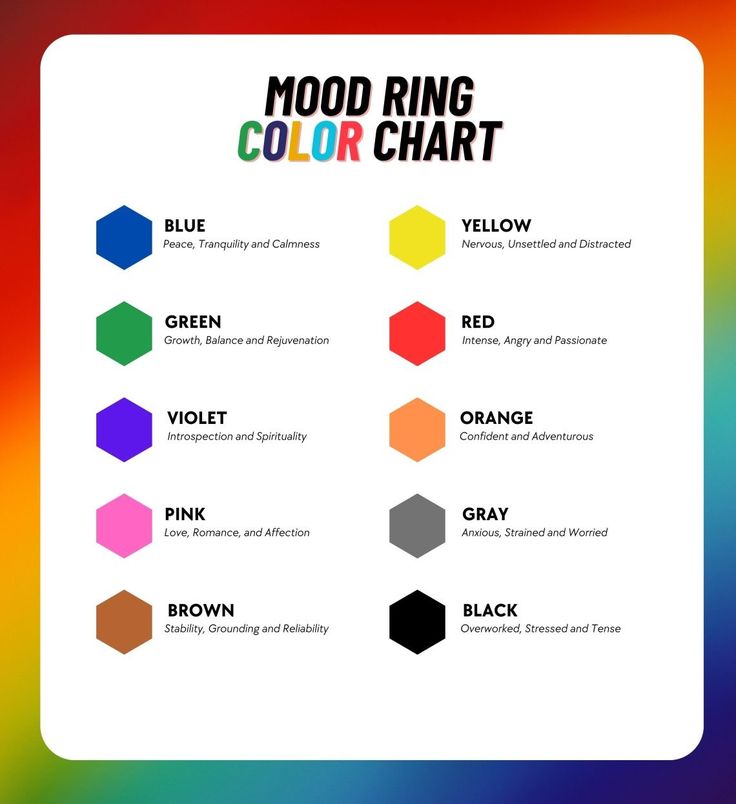
While variations exist depending on the manufacturer, most mood rings operate on a standard color spectrum, each associated with a specific emotional or physical state. Generally, the interpretations progress from cool, relaxed states to warm, intense ones, mirroring the concept of body temperature changes.


The Calm Spectrum: Blues and Purples
When the ring displays shades of blue or purple, it typically indicates a state of relaxation, calm, or contentment. A deep blue often suggests that you are feeling collected and at peace, possibly with good circulation indicating a healthy level of calmness. Lighter blues or lavender tones usually point to a sense of romance, sensitivity, or a tranquil mental state, making these some of the most sought-after mood ring colour meanings for those seeking serenity.
The Neutral Zone: Greens and Browns
Transitioning into the middle of the spectrum, green often represents a balanced state of transition. This can mean you are adapting to change, feeling curious, or experiencing a mix of emotions that leave you feeling centered. Brown tones, though less common, are usually interpreted as a sign of relaxation or a return to a grounded, earthy state of being, suggesting stability and a connection to the present moment.


The Heat of Emotion: Reds, Oranges, and Yellows
As the colors shift toward the warm end of the spectrum—red, orange, and yellow—the mood ring colour meanings intensify, pointing to elevated emotions and physiological changes. A bright red usually signifies passion, excitement, or anger, indicating a spike in body temperature. Orange often points to a feeling of boldness, energy, or nervous anticipation, while yellow can represent a creative spark, anxiety, or a state of hyper-awareness.
Beyond the Color Chart: Variables and Interpretation
It is crucial to approach mood ring colour meanings with a degree of flexibility, as the context of your life plays a significant role. Factors such as the ambient room temperature, how long you have been wearing the ring, and your recent physical activity can drastically alter the colors. Therefore, using the ring as a tool for introspection rather than a rigid diagnostic instrument will yield the most authentic and helpful results.
Cultural Legacy and Modern Relevance
Though they peaked in popularity during the vibrant 1970s, mood rings have maintained a nostalgic charm that continues to captivate new generations. They serve as a tactile reminder of the connection between our internal emotional worlds and our physical bodies. Understanding the traditional mood ring colour meanings allows you to appreciate the object not just as a novelty, but as a symbolic artifact of self-discovery, blending the mystical with the measurable in a simple ring.



Related Articles
Mood Ring Color Meanings Chart: Unlock Your Emotions Instantly
Mood rings have fascinated wearers for decades, transforming from a 1970s novelty into a lasting symbol of intuitive self-awareness. While the technology...

"Unlock Symbolism: Top Front Door Colors & Their Meanings"
Front door colors and meanings is a vital aspect of your home's curb appeal, and with the right choice, you can elevate your property's value, charm, and even...
Mood Stone Color Meanings: Unlock the Secrets of Your Gemstone Emotions
Mood stone color meanings provide a fascinating window into the subtle language of healing crystals. These natural tools communicate through a spectrum of...

"Vibrant Living Room Paint Colors: 2023 Ideas & Inspiration"
Transform Your Space: Exploring Paint Colour Ideas for Living Rooms Your living room is the heart of your home, a space where you relax, entertain, and create...

"Vibrant Yellow Living Room Ideas: Paint Colors to Brighten Your Space"
Elevate Your Space with Vibrant Yellow: Living Room Paint Colour Ideas Embracing the power of color in your living room can transform it into a welcoming...
"Vibrant Living Room Paint Colors: 20+ Inspiring Ideas for 2023"
Transforming your living room into a sanctuary of comfort and style begins with the perfect paint colour. The right hue can set the mood, evoke emotions, and...