Mastering the Photon Particle Setup: A Comprehensive Guide
Understanding the photon particle setup is fundamental for anyone exploring the frontiers of quantum mechanics and classical optics. At its core, this concept describes the controlled generation, manipulation, and detection of photons, treating them as distinct particles rather than just waves of energy. This framework is essential for technologies like lasers, quantum cryptography, and advanced imaging systems, where the precise behavior of light dictates performance and capability.
Theoretical Foundations of Photons as Particles
The journey from a wave-centric view of light to the acceptance of the photon particle setup begins with early 20th-century breakthroughs. Classical physics struggled to explain phenomena like the photoelectric effect, where light ejects electrons from a metal surface only if it surpasses a specific frequency, regardless of its intensity. Einstein's revolutionary proposal—that light delivers its energy in discrete packets called quanta—provided the perfect explanation. These quanta, later named photons, possess energy proportional to their frequency, establishing a critical duality where light behaves as both a particle and a wave depending on the experiment.
Core Components of a Physical Setup
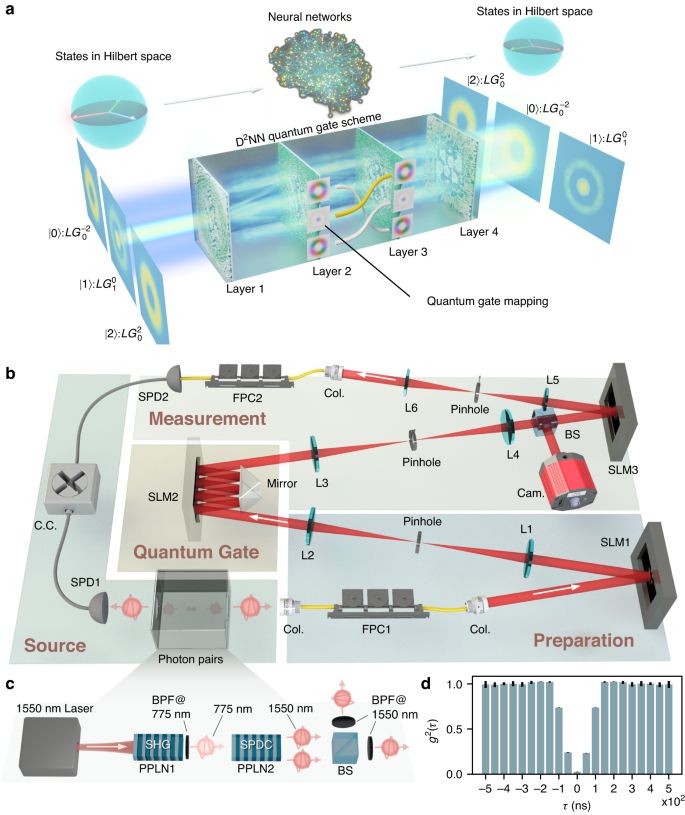
Translating the theory into a tangible photon particle setup involves integrating several key optical components. The system typically starts with a light source, which could be a laser for its coherence or a specialized LED for specific wavelengths. To prepare the light, optical filters isolate the desired frequency, while precision lenses and mirrors direct and shape the beam. The true "particle" aspect is often revealed through detectors like photomultiplier tubes or avalanche photodiodes, which register individual photon arrivals, confirming the quantized nature of the light stream.


Key Optical Components and Their Function
- Light Source: Provides the initial stream of photons; lasers offer high intensity and single wavelength, while entangled photon sources are vital for quantum experiments.
- Beam Modulators: Devices like electro-optic modulators or acousto-optic deflectors control the intensity, phase, or path of the light pulse with high speed and precision.
- Detection Apparatus: Single-photon detectors are the cornerstone of measurement, capable of registering the arrival of individual particles and providing temporal and spatial data with exceptional accuracy.
Applications in Modern Technology
The practical implications of mastering the photon particle setup extend far beyond theoretical physics. In the realm of quantum information science, controlling single photons is the bedrock of quantum key distribution (QKD). Here, the setup ensures that cryptographic keys are shared securely, as any eavesdropping attempt inevitably disturbs the quantum state of the photons, alerting the communicating parties. Furthermore, in biomedical imaging, techniques like fluorescence microscopy rely on detecting individual photons emitted by tagged molecules, enabling researchers to observe cellular processes with remarkable clarity.
Challenges in Implementation and Calibration
Building a reliable photon particle setup is fraught with challenges that demand meticulous engineering. Photons are notoriously fragile; they can be lost through scattering, absorption, or imperfect alignment, leading to noise and signal degradation. Maintaining ultra-low temperatures for certain detectors, minimizing ambient light interference, and ensuring thermal stability to prevent drift are constant hurdles. Successful setups require sophisticated feedback loops and vibration isolation tables to preserve the delicate quantum states being measured.


Future Directions and Research
The frontier of photonics is pushing the boundaries of what this setup can achieve. Current research focuses on creating integrated photonic circuits on chips, which promise to miniaturize and stabilize these systems for broader commercial use. Another significant area involves quantum computing, where photons serve as qubits—their particle-like nature allows for complex entanglement across a network, potentially solving problems intractable for classical computers. As our ability to generate and manipulate individual photons improves, the photon particle setup will remain central to the next generation of technological innovation.




Related Articles

Photon Setup Particle Mastery: Ultimate Guide to Configuration & Optimization
Photon setup particle systems represent a cutting-edge approach to simulating light interactions at the quantum level, bridging the gap between theoretical...

"Mastering Hue: A Comprehensive Guide to Choosing the Perfect Ceiling Fan Color"
Choosing the Perfect Ceiling Fan Color: A Comprehensive Guide Selecting the right ceiling fan color can significantly enhance your room's aesthetics and...

"Mastering Left-to-Right Swing Microwave: A Comprehensive Guide"
Understanding Left to Right Swing Microwave Doors The microwave oven, a kitchen staple, has evolved significantly over the years. One of the most notable...

"Mastering Your Home's Style: A Comprehensive Guide to Picking the Perfect Aesthetic"
Embarking on a Home Style Journey: A Comprehensive Guide Transforming your house into a home that reflects your personality and lifestyle is an exciting...

"Mastering Shower Design: A Comprehensive Guide to Types of Shower Doors"
Types of Shower Doors: A Comprehensive Guide When it comes to designing or renovating your bathroom, one of the most functional and aesthetic elements to...

"Mastering Rug Weave Types: A Comprehensive Guide"
Exploring the Art of Rug Weaving: A Journey Through Different Weave Types Rug weaving, an ancient art form, has evolved over centuries, resulting in a myriad...