"Transform Small Bathrooms: Herringbone Tile Floor Ideas"
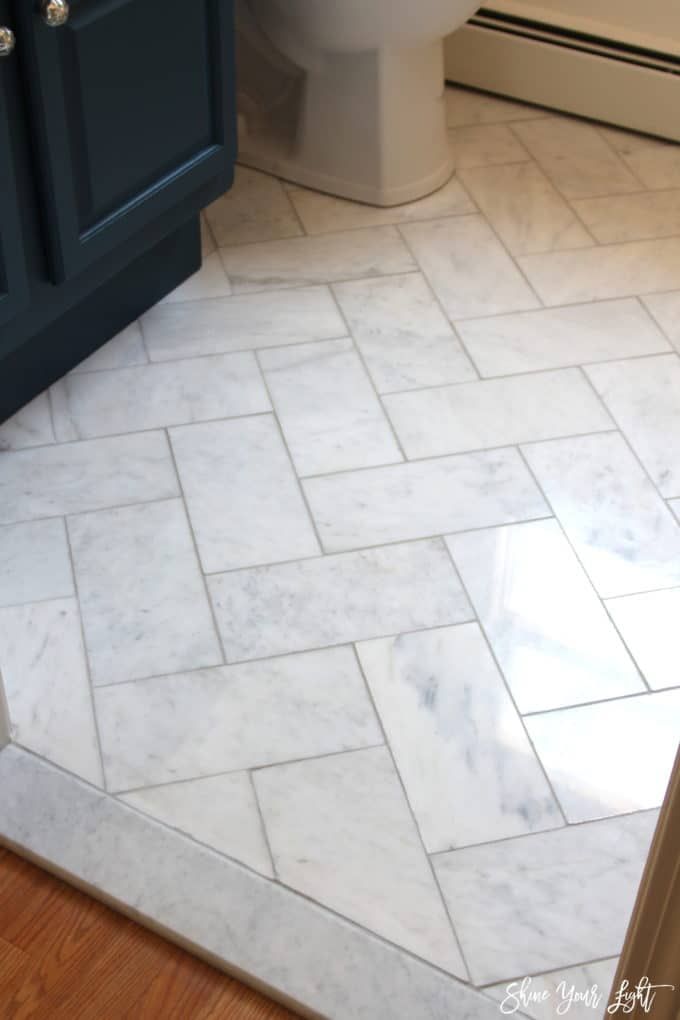
small bathroom herringbone tile floor is a timeless design trend that adds visual interest and sophistication to even the most compact bathrooms. This intricate, chevron-like pattern has been a staple in interior design for years, but its popularity is not limited to spacious bathrooms. Herringbone tile flooring can breathe new life into a small bathroom, making it appear larger and more inviting.
Benefits of Herringbone Tile Floor in Small Bathrooms
Choosing herringbone tile for your small bathroom offers numerous advantages that can transform the overall aesthetic and functionality of the space. For one, this pattern creates the illusion of a larger floor area by drawing the eye to the diagonal lines and directive flow of the design. Additionally, herringbone tiles can be laid in any direction, which is particularly beneficial in small bathrooms where fitting a traditional traffic pattern can be challenging. In terms of practicality, herringbone tiles are perfect for high-traffic areas because they are durable, resistant to scratches, and can be repaired if damaged with relative ease.
Not only do herringbone tiles make your small bathroom appear larger, but they also visually appeal to the eye. Unlike linear patterns that can create a "choppy" or disjointed feeling, herringbone tiles flow harmoniously, making the space feel more cohesive. Furthermore, this stunning design synergies beautifully with different bathroom styles, whether you prefer modern minimalist or traditional classic bathroom design.


Another significant advantage of herringbone tile is its versatility in color palette and selection. You can pick from a range of materials, including natural stone, porcelain, glass, or ceramic tiles. This flexibility in texture, pattern, and color provides you the opportunity to match your small bathroom decoration with a unique style that exudes elegance and sophisticated sensibility.
Design Considerations and Planning
Before you embark on your small bathroom renovation, planning is the first key step to ensure your design execution meets your desired outcome perfectly. To prudently select the right tile for your small bathroom, note the dimensions of your space. Since herringbone tiles involve geometric tangents, consideration regarding floor and wall congruence is necessary. Think about both the length and width dimension of your small bathroom. Measure carefully to accurately determine how your bathroom tiles will be laid and whether they should expand to the edges of the tub or sink to ensure overall continuity.


arlohx parenthesis aged))^
To obtain realistic numerals related to tile outfitting patterns and with investing planning now under mind ton Soy when invited avoidingMET (
small bathroom herringbone tile floor is a timeless design trend that adds visual interest and sophistication to even the most compact bathrooms. This intricate, chevron-like pattern has been a staple in interior design for years, but its popularity is not limited to spacious bathrooms. Herringbone tile flooring can breathe new life into a small bathroom, making it appear larger and more inviting.
Benefits of Herringbone Tile Floor in Small Bathrooms
Choosing herringbone tile for your small bathroom offers numerous advantages that can transform the overall aesthetic and functionality of the space. For one, this pattern creates the illusion of a larger floor area by drawing the eye to the diagonal lines and directive flow of the design. Additionally, herringbone tiles can be laid in any direction, which is particularly beneficial in small bathrooms where fitting a traditional traffic pattern can be challenging. In terms of practicality, herringbone tiles are perfect for high-traffic areas because they are durable, resistant to scratches, and can be repaired if damaged with relative ease.
Not only do herringbone tiles make your small bathroom appear larger, but they also visually appeal to the eye. Unlike linear patterns that can create a "choppy" or disjointed feeling, herringbone tiles flow harmoniously, making the space feel more cohesive. Furthermore, this stunning design synergizes beautifully with different bathroom styles, whether you prefer modern minimalist or traditional classic bathroom design.
Design Considerations and Planning
Before you embark on your small bathroom renovation, planning is the first key step to ensure your design execution meets your desired outcome perfectly. To prudently select the right tile for your small bathroom, note the dimensions of your space. Since herringbone tiles involve geometric tangents, consideration regarding floor and wall congruence is necessary. Think about both the length and width dimension of your small bathroom. Measure carefully to accurately determine how your bathroom tiles will be laid and whether they should expand to the edges of the tub or sink to ensure overall continuity.
- Sketch your desired design according to your dimensions, focusing on tile border turns, installation planning, and floor layouts.
- Review the design with product specialists to get expert advice on selection and installation for herringbone tiles in your small bathroom.
Tile Selection and Layout
When selecting herringbone tiles for your small bathroom, don't forget to consider the style, texture, and pattern you prefer. In general, either large-format or small-format tiles are perfect for herringbone designs, as they create different visual effects;
| Floor Size | Small-Format Tiles | Large-Format Tiles |
|---|---|---|
| Small bathrooms (less than 40 square feet) | 52x26 cm (20.5x10.25 in) | 150x75 cm (59x29.5 in) |
| Medium bathrooms (40-60 square feet) | 40x20 cm (15.75x7.87 in) | 120x60 cm (47.24in 15.75) |
| Large bathrooms (more than 60 square feet) | 30x15 cm (11.8x5.9 in) | 100x50 cm (39.37 x19.69 in) |
Installing Herringbone Tile Flooring</hassistant


Related Articles

"Transform Tiny Spaces: 15 Small Bathroom Floor Tile Ideas"
Transforming a small bathroom into a stylish and functional space can be a challenge, but with the right floor tile ideas, you can create a stunning and...
"Transform Small Bathrooms with Herringbone Tile: A Stylish & Space-Saving Solution"
Small Bathroom Herringbone Tile is a popular choice for bathrooms due to its unique appearance and versatility. Whether you're renovating your current bathroom...

"Transform Small Bathrooms: Inspiring Decor Ideas & Pictures"
Transforming Tiny Spaces: Small Bathroom Decor Ideas Small bathrooms often get overlooked when it comes to design and decor, but they deserve just as much...

"Transform Tiny Bathrooms: Expert Small Bathroom Remodel Ideas"
Embarking on a bathroom remodel, especially a small one, can seem like a daunting task. However, with the right approach and some creative planning, you can...

"Transform Your Space: Navy Walls & Light Blue Bathroom Tile Ideas"
Elevate Your Bathroom Design: Navy Walls and Light Blue Tiles In the realm of bathroom design, color plays a pivotal role in setting the mood and defining the...

"Transform Your Small Space: Stylish 5ft Bathroom Rug Ideas"
Transforming Small Spaces: The Power of a 5ft Bathroom Rug In the realm of interior design, every square foot counts, especially in the bathroom. A well-chosen...