The Ultimate Guide to Smokey 2 Stroke Engine Tuning & Performance
For many enthusiasts, the smokey 2 stroke engine represents the raw, unfiltered soul of mechanical engineering. You can hear it before you see it, a distinct crackle and pop that announces its presence long before the machine roars to life. This signature sound isn't just noise; it's the auditory signature of a combustion process that is as efficient as it is archaic, blending fire and oil in a way that four-stroke engines simply cannot replicate.
The Core Mechanics: Why the 2 Stroke Cycle is Unique
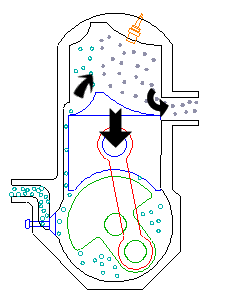
The defining characteristic of a smokey 2 stroke engine is its power cycle, which completes in just two piston strokes instead of the four found in a 4-stroke equivalent. This fundamental design eliminates the need for valves and a complex camshaft, relying instead on ports cut into the cylinder wall. The process—intake, compression, power, and exhaust—is all squeezed into a single rotation of the crankshaft, creating a power pulse for every revolution. This frequency is the root cause of the engine's unique character and its tendency to produce visible emissions.
Oil Mixing and the Source of the Smoke
Unlike a 4-stroke engine that uses a separate oil pan and sump, a 2 stroke relies on the fuel itself to provide lubrication. Riders must pre-mix a specific ratio of high-quality two-cycle oil with gasoline, a practice that is both an art and a science. In a poorly tuned or worn engine, this oil isn't fully combusted, leading to the thick, blue-tinged smoke that defines the "smokey" aesthetic. While modern formulations have reduced this smoke significantly, the visual and olfactory signature remains an indelible part of the experience.


Performance Advantages and the Rider's Connection
Despite their environmental drawbacks, 2 stroke engines offer compelling advantages that keep them relevant. The power-to-weight ratio is exceptional, as there is no heavy valve train or separate transmission block. This results in a lightweight unit that delivers immediate power across the RPM range, creating a visceral connection between the rider and the machine. The mechanical simplicity also translates to easier maintenance and the ability to operate in any orientation, making them ideal for applications like chainsaws, dirt bikes, and model aircraft.
| Aspect | 2 Stroke Engine | 4 Stroke Engine |
|---|---|---|
| Power Strokes | Every revolution | Every other revolution |
| Oil Lubrication | Pre-mixed with fuel | Separate sump (dry sump or wet) |
| Weight & Complexity | Lighter, simpler | Heavier, more complex |
| Emissions | Higher particulate matter | Generally cleaner burn |
The Cultural and Aesthetic Appeal
Beyond the mechanics, the smokey 2 stroke engine holds a distinct cultural cachet, particularly in off-road motorsports. The sound is iconic, a shrill bark that echoes through the woods and signals the arrival of a machine built for aggression and agility. For riders, that smoke trailing behind the bike is a badge of honor, a visible testament to the raw energy being expelled. It connects the operator to a heritage of machinery that values character and performance over sterile efficiency.


Modern Evolution and Environmental Considerations
Regulatory pressures and environmental awareness have pushed the evolution of the 2-stroke design to its limits. Emissions laws have effectively banned traditional two-strokes in many road-going applications, forcing manufacturers to adopt cleaner technologies. However, the niche applications persist, particularly in handheld tools and specific motorsports categories where the weight and power advantages are irreplaceable. Innovations like direct injection 2 strokes have drastically reduced smoke and oil consumption, proving that the technology can adapt to meet modern standards without losing its fundamental appeal.
Maintaining the Legacy: Tuning and Responsibility
Owning and operating equipment with a smokey 2 stroke engine requires a specific skill set. Proper tuning is essential to manage the oil-to-fuel ratio, ensuring optimal performance while minimizing excessive smoking that indicates poor combustion. Regular maintenance of the air filter, spark plug, and carburetion is crucial. Riders must balance the thrill of the raw sound and mechanical simplicity with a responsible approach to fuel mixture and emissions, ensuring that this classic technology survives in an increasingly regulated world.


Related Articles

The Ultimate Guide to Cleaning Your Lawn Mower Air Filter: Boost Performance & Engine Life
Keeping your lawn mower in peak condition is the single most effective way to ensure a lush, even cut season after season. Among all the routine maintenance...

Toyota Corolla NC Builders: Ultimate Guide to Building, Tuning, and Performance Parts
The search for the perfect daily driver often leads enthusiasts to the reliable and practical Toyota Corolla, and the Corolla NC240 represents a significant...

Zama and Walbro Carburetor Tuning: Ultimate Guide to Peak Performance
When it comes to small engine repair and performance tuning, two names consistently surface in technical discussions: Zama and Walbro. While often mentioned in...

Unlock Peak Performance: The Ultimate Two Stroke Tuners Pipe Design Guide
The exhaust path is the final and often most critical link in the power chain of any two-stroke engine, and the design of the two stroke tuners pipe is the...

Ebonizers Motor Sport: Ultimate Performance Tuning & Style Guide
Ebonizers motor sport represents a specialized segment within the high-performance automotive industry, focusing on the creation of vehicles that prioritize...

"Top Rated Engine Oils for Lawn Mowers: Your Ultimate Guide"
Best Engine Oil for Lawn Mowers: A Comprehensive Guide When it comes to maintaining your lawn mower, choosing the right engine oil is as crucial as regular...