Thornless Chilean Mesquite: The Ultimate Low-Maintenance Shade Tree
The thornless Chilean mesquite (Prosopis chilensis var. inermis) represents a sophisticated evolution in the landscape performance of a genus long celebrated for its durability. Unlike its common namesake, which often presents a formidable defensive barrier of thorns, this cultivar offers the architectural grace and ecological benefits of a classic shade tree without the perilous inconvenience. Its journey from the arid landscapes of South America to urban parks and private gardens highlights a growing appreciation for form that does not sacrifice function for safety.
Botanical Distinction and Origins
Botanically classified as a variety of the Chilean algarrobo, this thornless variant is a testament to selective cultivation. While the standard Prosopis chilensis can develop intimidating spines along its branches and trunk, the inermis variety has been nurtured to express a naturally smooth, cylindrical trunk. This tree is a member of the Fabaceae, or legume, family, meaning it engages in a symbiotic relationship with nitrogen-fixing bacteria. This biological trait allows it to thrive in poor soils, enriching the earth beneath its canopy while requiring minimal external fertilization, making it an excellent choice for sustainable landscaping.
Structural Elegance and Growth Habit
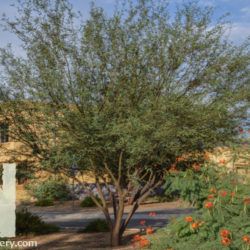
The visual appeal of the thornless Chilean mesquite is immediate. It develops a strong, upright structure with a single leader, ensuring a clean, statuesque appearance. The canopy forms a broad, dense umbrella of fine-textured, bipinnate leaves that rustle gracefully in the wind. This growth habit provides dappled shade that is visually appealing without creating the dense, dark understory associated with some other shade trees. As the tree matures, the absence of thorns allows for close interaction, inviting a sense of connection between the plant and its human observers.


Adaptability and Environmental Resilience
One of the primary reasons for the popularity of this mesquite is its exceptional adaptability. It is a tree forged by the harsh climates of Chile, granting it an innate resilience to drought, heat, and poor soil conditions. Once established, it demonstrates a remarkable tolerance to both flooding and extended dry periods, reducing the need for constant irrigation. Furthermore, its resistance to pests and diseases ensures that it remains a low-maintenance specimen, capable of thriving in urban environments where pollution and compacted soil are common challenges.
Practical Landscaping Applications
Designers and homeowners value the thornless Chilean mesquite for its versatility. Its non-invasive root system makes it suitable for planting near patios, walkways, and underground utilities, a significant advantage over trees with aggressive surface roots. The clear trunk provides excellent clearance for pedestrians and vehicles, fitting seamlessly into street tree planting strips. It serves as an outstanding specimen tree, offering seasonal interest with pale green spring foliage and a graceful form that provides contrast to evergreens and flowering shrubs in mixed borders.


Maintenance and Long-Term Care
While the tree is low-maintenance, a basic care regimen ensures it reaches its full potential. Young trees benefit from deep watering during their first few years to establish a robust root system. Pruning is primarily focused on removing any crossing or rubbing branches to maintain the desired structure, a task simplified by the lack of thorns. The growth rate is moderate, allowing the tree to develop strong wood and a substantial canopy without becoming unwieldy, ultimately resulting in a long-lived addition to the landscape that can provide shade for generations.
Comparative Analysis
When compared to other popular shade trees, the thornless Chilean mesquite offers a distinct niche. Unlike fast-growing but brittle species that are prone to storm damage, Prosopis chilensis var. inermis exhibits strong, flexible wood. Unlike water-intensive lawns, its xeriscaping capabilities conserve precious resources. The table below summarizes these advantages in relation to common alternatives.
| Feature | Thornless Chilean Mesquite | Common Shade Trees (e.g., Maple) |
|---|---|---|
| Thorn Presence | Absent | Absent |
| Drought Tolerance | High | Moderate to Low |
| Root Invasiveness | Low | Moderate to High |
| Growth Rate | Moderate | Fast to Moderate |
The Verdict for Modern Landscapes
In an era where landscaping priorities are shifting towards practicality, beauty, and resource conservation, the thornless Chilean mesquite stands out as an intelligent choice. It bridges the gap between ornamental appeal and ecological responsibility. By selecting this tree, the gardener is not merely planting a shade provider; they are investing in a resilient, elegant, and safe structure that enhances the property value and contributes positively to the local ecosystem for decades to come.




Related Articles

Chilean or Velvet Mesquite: The Ultimate Guide to These Hardy Trees
Among the arid landscapes of the American Southwest and northern Mexico, two trees stand out for their resilience and utility: the Chilean mesquite and the...

Thornless Dwarf Crimson Barberry: The Ultimate Low-Maintenance Shrub
The thornless dwarf crimson barberry represents a sophisticated evolution in ornamental shrubbery, offering the vibrant color of traditional barberries without...

The Ultimate Guide to Mesquite Trees in Arizona: Landscaping & Care
Standing against the Arizona sky, the mesquite tree represents a quiet endurance, a living link to the state's untamed past. Often dismissed as a common desert...

Grow Thornless Lemon Trees: The Ultimate Guide to Hassle-Free Citrus Gardening
The thornless lemon tree represents a significant breakthrough for home gardeners and culinary enthusiasts who have long admired the vibrant zest and juice of...

"Top 8x10 Canopies: Ultimate Shade Solutions"
Unveiling the Versatility of 8 x 10 Canopies In the realm of outdoor events and temporary shelters, 8 x 10 canopies have emerged as a popular choice, striking...

"Secure Cantilever Umbrella Bases: Ultimate Stability for Your Outdoor Shade"
Strengthening Your Outdoor Space: The Importance of Umbrella Bases for Cantilever Umbrellas In the pursuit of creating a comfortable and functional outdoor...